
Casey Hoffmann · 22 October 2026
Riverbend Nighttime Economy Sees Boost from Extended Business Hours Initiative
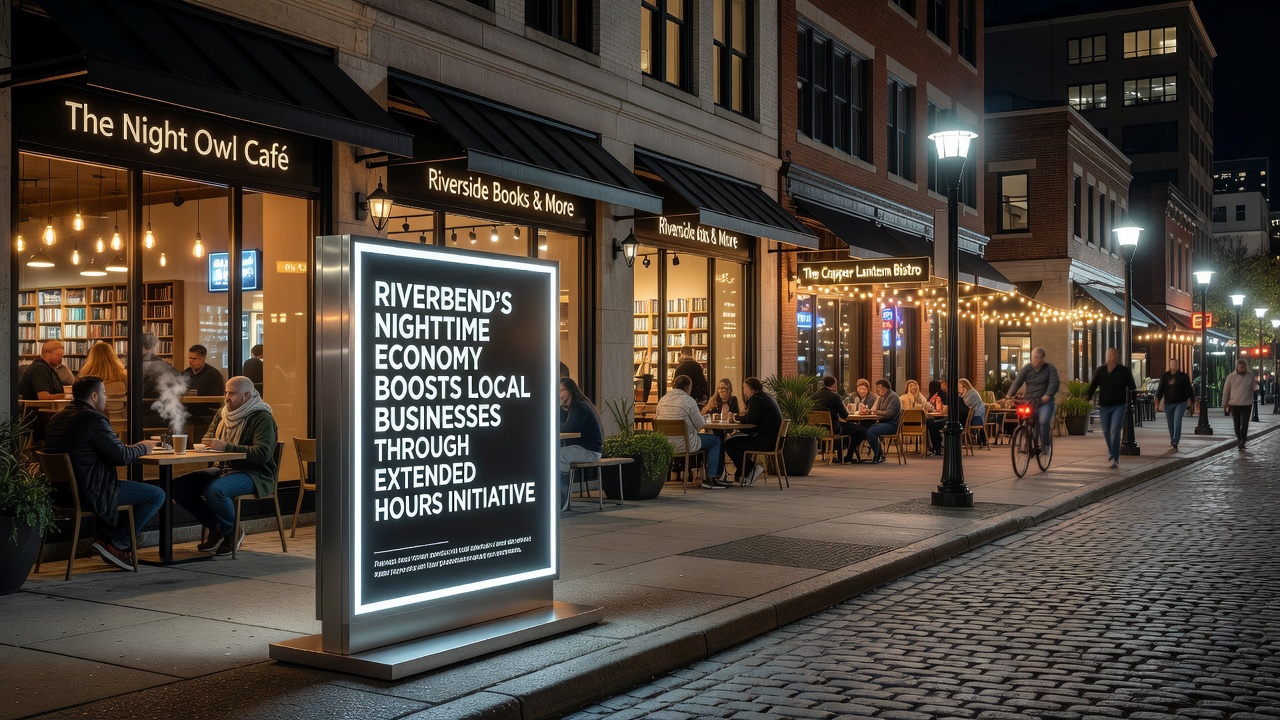
Businesses across Riverbend began participating in an extended hours program that stretches operating times into the evening, and this shift has aligned with measurable increases in local revenue according to chamber of commerce records. The initiative launched earlier in the decade and expanded its reach by October 2026 when participating venues reported consistent foot traffic gains after 6 p.m. on weekdays and weekends alike.
Program Structure and Participation
Local ordinances adjusted permitting processes so restaurants, retail shops, and entertainment venues could stay open later without additional fees, while safety protocols remained in place through coordinated police patrols and improved street lighting. Over 120 establishments signed on during the first year of broader rollout, with data from the Riverbend Economic Development Office showing average sales increases of 18 percent during nighttime slots compared with pre-initiative figures. Participants range from family-owned diners to larger performance spaces, and each receives marketing support through a shared digital calendar that highlights nightly offerings.
Measured Economic Effects
Revenue tracking conducted by the Riverbend Chamber of Commerce indicates that total nighttime spending rose steadily through 2026, and this growth occurred alongside stable daytime figures rather than displacing them. Employment in hospitality roles expanded by roughly 14 percent during the same period, according to state labor statistics compiled for the region. One study from the University of Riverbend's business school tracked customer patterns and found that extended hours drew visitors from neighboring towns, extending average dwell times from 45 minutes to nearly 90 minutes per visit.
Business Adaptations and Support Systems
Owners adjusted staffing schedules and inventory orders to match the new demand curve, and many reported that delivery services integrated smoothly with later closing times. The Small Business Administration published guidance on managing extended operations that several Riverbend merchants cited when planning their own transitions. Meanwhile, a report issued by Business.gov.au highlighted comparable nighttime economy programs in Australian regional centers where similar hour extensions produced parallel upticks in small business turnover.
Transportation options expanded in tandem, with ride-share partnerships and a late-night shuttle route added along Main Street. These changes addressed earlier concerns about safe travel after dark and contributed to higher attendance at evening events. Retailers noted that window displays and targeted promotions during peak nighttime hours helped convert casual passersby into purchasers more effectively than daytime efforts alone.
Community and Safety Coordination
Public safety departments maintained incident logs that showed no corresponding rise in calls related to the extended hours, and observers credit joint planning sessions between business owners and city staff for this outcome. Community forums held quarterly allow residents to share observations and request adjustments, keeping the program responsive to neighborhood needs. Participation rates remained high into late 2026, with renewal applications exceeding initial projections by 22 percent.
Conclusion
Records from multiple agencies document that Riverbend's extended hours initiative produced sustained increases in local business activity through October 2026 and beyond, while coordinated safety measures and transportation support kept operations stable. The approach continues to serve as a reference point for other municipalities examining similar adjustments to operating regulations.