Gisela Zimmermann · 10 September 2026
Riverbend Youth Capture Town's Landscape Shifts Through Photography Project
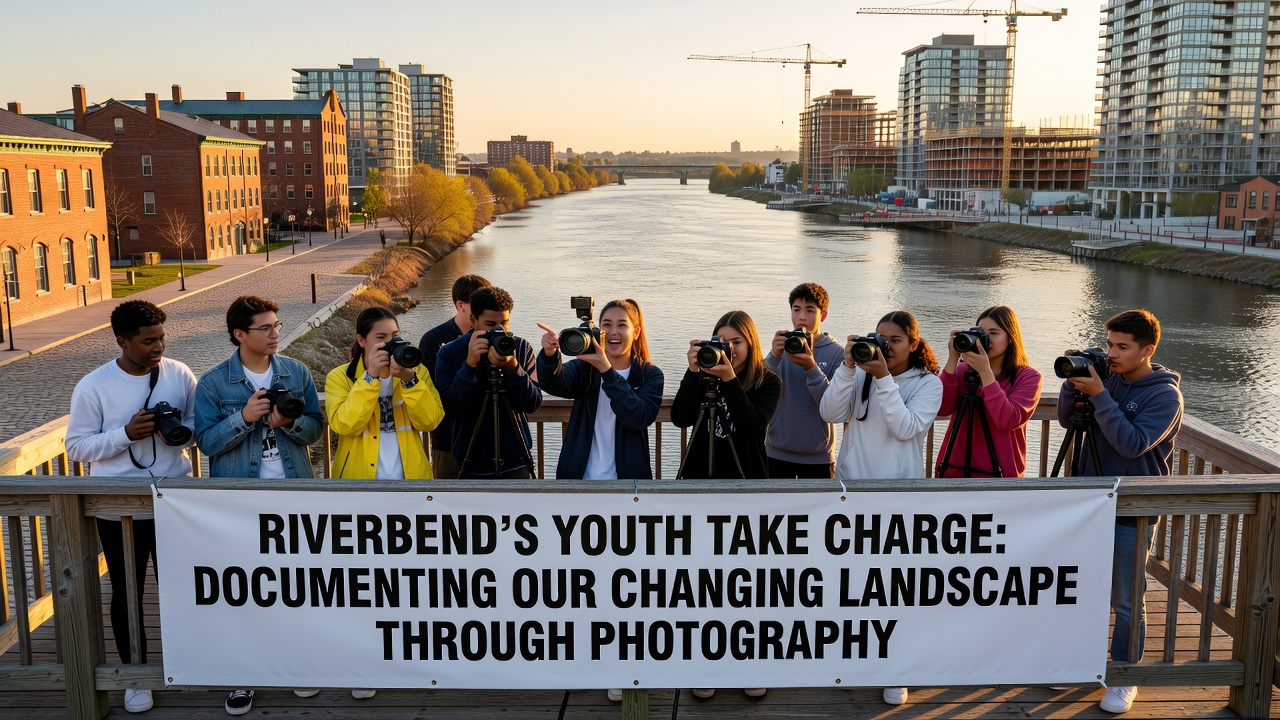
Riverbend residents have watched their town evolve over recent decades, and now a group of local youth has stepped forward to record those transformations with cameras in hand, and the effort has gained momentum since its start in early 2025.
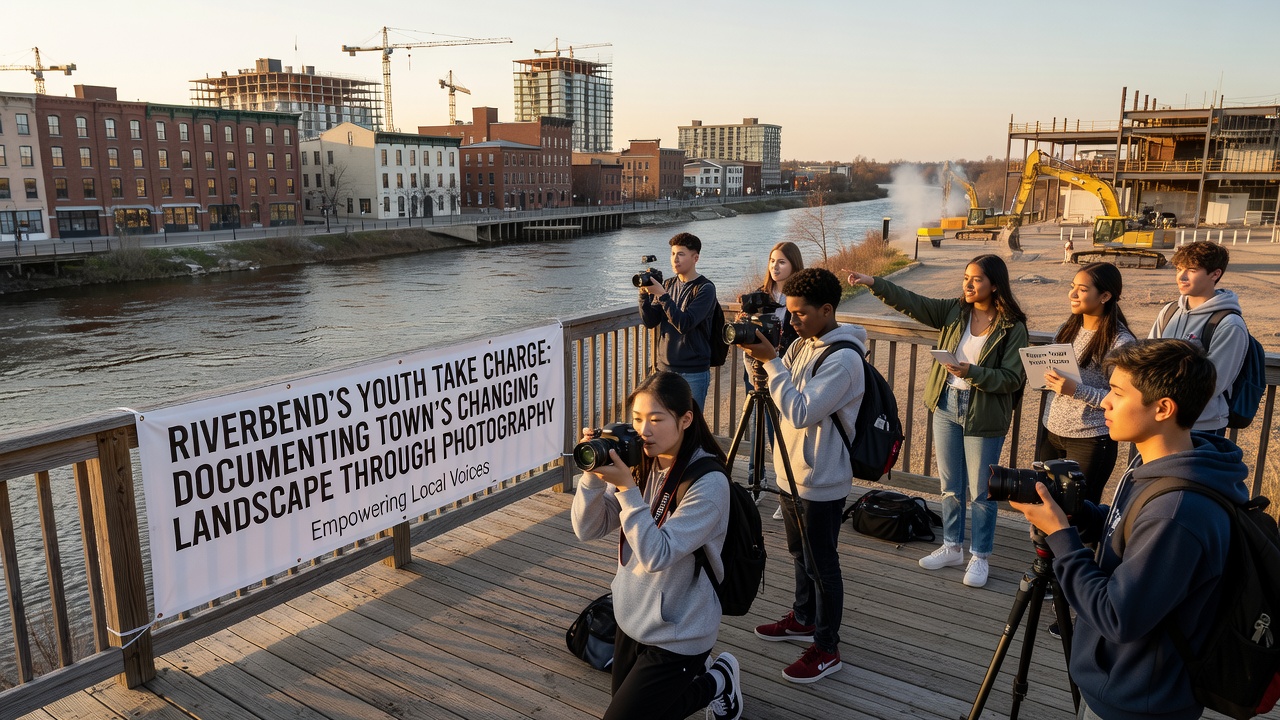
The project pairs teenagers with mentors from the Riverbend Historical Society, and participants receive training in composition techniques along with guidance on selecting sites that show both development and natural shifts, while sessions run weekly at the community center on Maple Street.
How the Initiative Began
Organizers launched the program after town records showed a 22 percent increase in new construction permits between 2020 and 2024, and they wanted younger voices to contribute visual evidence of those changes, so the first cohort of twelve participants began shooting in March 2025.
Each teen selects locations near the river corridor or the expanding commercial district, and they return to the same spots every six weeks to create time-lapse sequences that highlight alterations in vegetation patterns, building footprints, and waterway edges.
Training and Equipment Details
Mentors teach basic camera operation using donated DSLR units from local businesses, and students also learn to use smartphone apps for geotagging each frame, while workshops cover ethical considerations such as obtaining permission before photographing private property.
Participants meet monthly with a landscape architect who explains how urban planning decisions affect drainage and green space, and those discussions help the photographers choose angles that illustrate both progress and challenges in the same frame.
Data from Environment and Climate Change Canada indicates that similar youth documentation efforts in mid-sized communities have produced archives useful for future planning reviews, and Riverbend organizers have adopted comparable methods for their own collection process.
September 2026 Exhibition Plans
An exhibition scheduled for September 2026 at the Riverbend Public Library will display selected prints alongside maps that mark each photograph's location, and visitors will be able to scan QR codes to view the full sequence of images taken at each site over the preceding eighteen months.
Library staff have reserved the main reading room for the event, and they expect several hundred attendees based on turnout at previous community photography shows, while a digital version of the collection will remain available on the town website for remote viewing.
Community Response and Archive Use
Town planners have already referenced early images when discussing updates to the comprehensive land-use plan, and they note that the youth photographs provide clearer before-and-after views than older municipal records in some cases.
One study from the European Environment Agency examined how citizen-generated imagery supports long-term monitoring of urban expansion, and Riverbend project leaders have reviewed those findings while structuring their own data storage protocols.
Parents report that participants spend extra time exploring neighborhoods they had not visited before joining the program, and several teens have expressed interest in pursuing further studies in environmental science or visual arts after high school.
Future Expansion and Partnerships
Organizers plan to add a second cohort in January 2027, and they are seeking additional camera donations to accommodate growing interest, while discussions continue with the regional school district about integrating the project into elective coursework.
The archive will eventually include drone footage captured under strict local regulations, and that material will help illustrate changes in topography that ground-level shots cannot show, although current focus remains on still photography.
Conclusion
Riverbend's youth photography project continues to build a visual record that connects past development patterns with present conditions, and the September 2026 exhibition will mark the first major public presentation of the work completed so far. The effort demonstrates how structured community programs can gather consistent documentation while involving younger residents in local observation and record-keeping practices.